Your first years in practice
can be hard.
You shouldn’t have to figure
them out alone.
Clinical mentorship and coaching for new graduate NPs — including those heading into community health and FQHC settings.
20-minute call. No pressure. Just a real conversation about where you are and whether this is a fit.
You’re worried about year one.
You completed your program. You worked hard. You know your stuff.
But now it’s the real world — and the level of responsibility is entirely different. You’re not carrying out someone else’s orders anymore. You’re placing them. You’re the decision maker. You are, perhaps for the first time, a clinician and a provider in the fullest sense of those words.
True mentorship — at a workplace or through an academic program — is limited, despite the best intentions of the people around you. Bridging your academic training and clinical experience to the full weight of real-world practice can feel like something you’re navigating alone.
You don’t have to be.
Most mentorship programs focus on clinical guidance — and by the time you’ve completed your training and passed your boards, you’re solid there. That’s not the gap.
What’s harder to find is someone who will help you navigate the real complexity of practice: the systems, the structures, the moments where evidence-based medicine meets a patient who is doing their absolute best inside a healthcare system that isn’t always designed to help them.
That’s where true mentorship lives — in the dialogue, in the practical application, in learning how to show up fully for the people in front of you. That’s what The NP Mentorship Studio is built for.
An ongoing, experienced thought partner you feel safe being truly open with. Someone to share your successes and failures with. Your strengths, your challenges, and your fears.
Clinical Reasoning Is a Muscle
We all arrive with different backgrounds — clinical experience, life experience, and everything in between. Talking through scenarios, past and present, with someone who has seen it before is how reasoning sharpens. It takes repetition and real feedback.
Uncertainty Keeps Us Safe
Wide differentials balanced with practicality make excellent clinicians. Holding the worst case scenario while weighing what’s most likely, what the patient needs, and what is practical — that’s the work. Sitting with uncertainty, rather than rushing past it, is also how we collaborate most honestly with our patients.
Navigating Your Practice Support Structure
Practice models vary by state — from full oversight to collaborative agreements to full practice authority. Navigating those dynamics confidently is one of the most underestimated skills of your first year. I can help you find your footing within whatever structure you’re working in.
Worry in Year One Means You Care
You’ve taken on a profound level of responsibility for other human beings. Stress and uncertainty in your first years aren’t a warning sign — they’re evidence that you take that seriously. I would worry if you didn’t feel it. What I can offer is a space to name what’s hard and get practical, honest support for everything that tends to surface in those first one to two years.
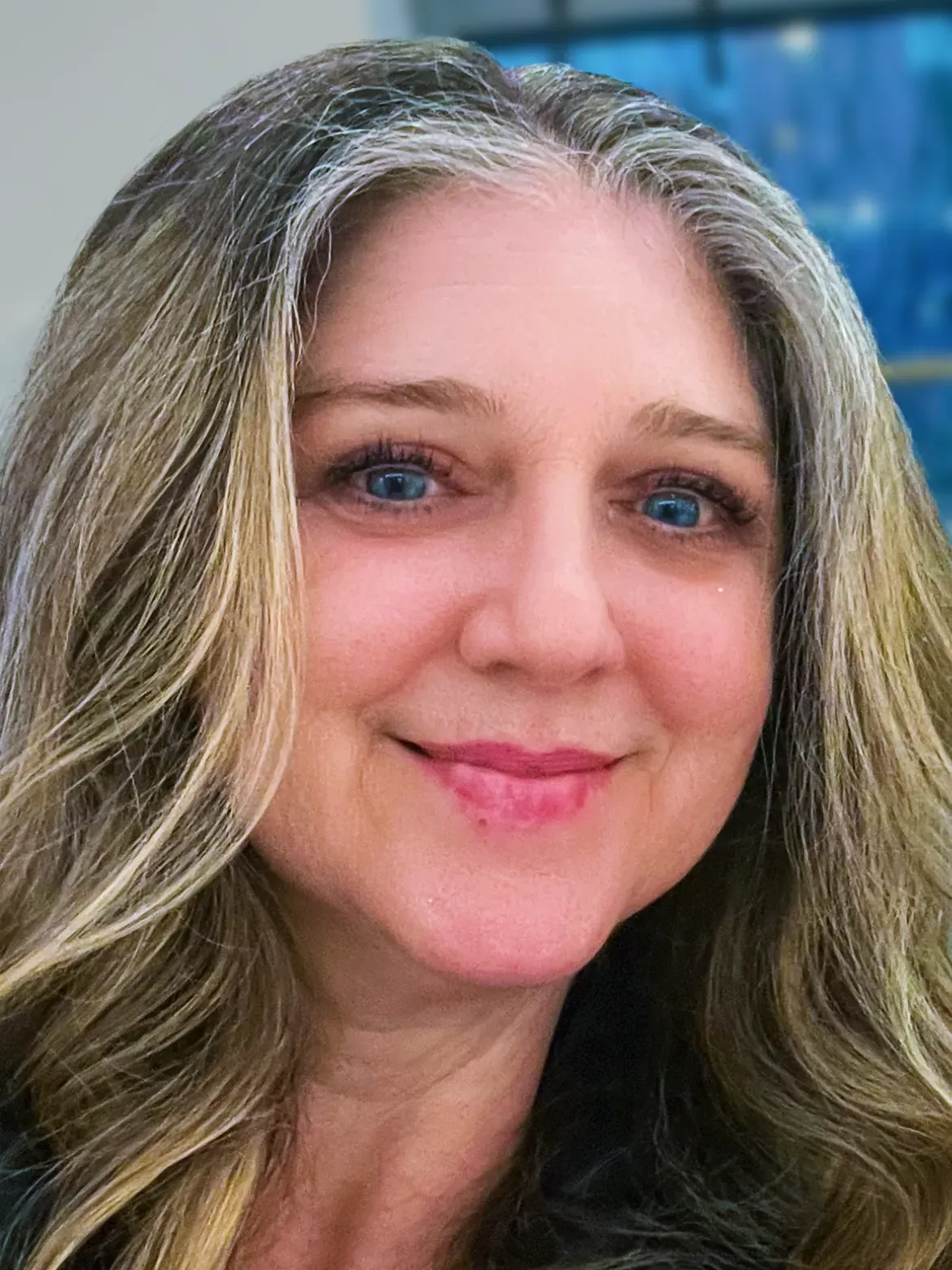
I didn’t start as a nurse practitioner. I started as someone who believed everyone deserved access to good care.
My career began as a medical assistant — doing the work that keeps clinics running and patients moving through a system that isn’t always built for them. That early experience shaped everything that came after. I saw what low-barrier access to care looked like up close, and I knew that’s where I wanted to spend my career.
From medical assistant I became an RN, and from RN I became a Family Nurse Practitioner. My first role as a new grad NP was in New York City — practicing in primary care clinics integrated into family homelessness shelters, and in settings that integrated primary care into psychiatric care for adults living with serious and persistent mental illness. Those early years taught me something I have carried into every clinical encounter since: that caring for the most vulnerable people in our communities isn’t a specialty. It is a calling — and it demands the very best of us, clinically and humanly.
From New York I built a career that has taken me to San Francisco, Marin County, and now Eugene, Oregon — practicing almost exclusively in Federally Qualified Health Centers for nearly 20 years. FQHCs are the highest-complexity, most under-resourced primary care environments in the country. The patients are the most challenging. The support is often the thinnest. And the work is some of the most meaningful I can imagine doing.
Along the way I became a preceptor. I’ve precepted NP students from programs across the country — for nearly as long as I’ve been practicing. That relationship between experienced clinician and new provider is something I take seriously. I’ve watched students grow from uncertain learners into confident, compassionate clinicians, and I’ve never stopped finding that process extraordinary.
As an Assistant Medical Director, my work is rooted in systems innovation, program development, and community health leadership — building capacity and driving change in high-complexity primary care. That same commitment to shaping the future of this profession led me to a faculty appointment at Georgetown University’s Nurse Practitioner program, where I precepted and mentored the next generation of advanced practice providers. And I paid off all of my student loans through NHSC loan repayment participation — which means when we talk about navigating that system, I’m speaking from experience, not theory.
I built The NP Mentorship Studio because my students kept asking if I’d still be available after they graduated. The answer, whenever I could manage it, was yes. This is the formal version of that yes.
What I believe about care, about clinicians, and about what this work is really for.
High-quality, accessible healthcare is not a privilege. It is essential.
Nurse practitioners are not a gap-filler or a workaround. We are a cornerstone of what an equitable, functional healthcare system can look like. Mentoring new NPs is, for me, an act of giving back — to our community of providers, to our patients, and to a healthcare system that urgently needs our best.
We are going to make mistakes. That’s not a failure — it’s how we become excellent.
Our training gives us the foundation to minimize them — but more importantly, to learn from them. The best clinical environments are ones where mistakes can be named, examined, and grown from without shame. Creating that culture of openness, curiosity, and continuous improvement is good for clinicians. It is good for patients.
Our patients are our partners — not passive recipients of our care.
They are doing their best to navigate a system that is often working against them. Building trust with our patients, one interaction at a time, is some of the most sacred work we do. The experience of care matters as much as the quality of care. Medical trauma is real. The best clinicians are the ones who work deliberately not to cause it.
Curiosity is a clinical virtue. Uncertainty, held well, keeps us safe.
I want every NP I work with to stay genuinely curious — about their patients, about their own practice, and about the systems they’re working within. Questions are not a sign of weakness. They are how we become excellent. The NPs who worry me are the ones who stopped asking them.
The capacity to be trauma-informed, whole-person, and holistic in their care. The confidence to sit with uncertainty without being paralyzed by it. The skills to navigate complex systems on behalf of the people who need them most. And the knowledge that caring for the most vulnerable in our communities is not a burden — it is a privilege.
Whether you’re heading into primary care, community health, or specialty practice — this mentorship space is for you.
My approach is rooted in trust, genuine relationship, creativity, and collaborative problem solving. I meet you where you are — and we figure it out together.
I bring particular depth in navigating the real-world barriers that get between good clinicians and excellent care — including quality metrics for pay-for-performance and regulatory purposes, and the complex, often underestimated dynamics of interdisciplinary care team models.
Choose the path that fits where you are.
All engagements begin with a free 20-minute discovery call.
A low-barrier entry point. Walk away with something actionable before committing to a package.
- One focused topic or case
- Honest conversation about fit
- No commitment required
Weekly sessions + async support. Built for NPs in their first 0–18 months.
- Clinical reasoning & differentials
- Documentation that protects you
- Practice support structure navigation
- Loan repayment program guidance
- Async support between sessions
Bi-weekly sessions + case consultation. For NPs ready to deepen their practice.
- Panel management & quality metrics
- Complex patients & social determinants
- Career trajectory & leadership
- Practice support optimization
- Case consultation included
- Sliding fee & UDS metrics
- Complex social determinants of health
- FQHC care team dynamics
- NHSC loan repayment navigation
- De-identified case submission
- Structured clinical reasoning feedback
- 48-hour turnaround
- Available to any NP
- 6–10 NPs per cohort
- Weekly virtual sessions
- Async community forum
- Loan repayment, burnout, documentation
Your student loans may be more manageable than you think.
Many nurse practitioners qualify for federal and state loan repayment programs simply by virtue of where they work — including FQHCs, community health centers, and other settings that serve underserved populations. The landscape of available programs shifts regularly, and keeping up with what’s available, what you qualify for, and how to position yourself strategically is genuinely complex.
I paid off my own student loans through loan repayment program participation — and while the programs themselves have evolved significantly since then, the importance of understanding and actively navigating your options hasn’t changed. Part of what I offer is helping you build awareness of what exists, understand how these systems work, and advocate for yourself within them.
This is a conversation worth having early — ideally before you accept your first position.
Getting started is easy.
Tell me about yourself
Complete a short 5-question form — takes about 3 minutes. Tell me where you are, what’s feeling hard, and what you’d want to be different six months from now.
Let’s talk
Book a free 20-minute discovery call. We’ll talk about your situation, what working together would look like, and whether it’s a fit. No pitch. No pressure.
Begin with a plan
If we’re both a yes, we start with a goals-alignment session and build a clear arc for your engagement. You’ll know exactly what we’re working toward.
This is for you if…
- Feels like the gap between school and practice is bigger than anyone warned you about
- Second-guesses your clinical decisions even when you’re probably right
- Is navigating a new practice support structure without a real guide
- Wants to understand and access federal loan repayment programs
- Wants to become a genuinely excellent clinician, not just a functional one
- You’re practicing in primary care, or in any setting that serves underserved or underinsured populations
- You’re feeling overwhelmed by the complexity of your patients’ needs or the systems barriers standing between them and good care
- You want a deeper understanding of how healthcare systems actually work — so you can navigate them on behalf of the people in front of you
- Your patients are high-complexity and your support feels thin
- You want mentorship from someone who has spent 20 years doing exactly what you’re walking into
From the NPs and students who know this work firsthand.
When I worked with Briana, I was completing my Family Nurse Practitioner clinical training through Georgetown University. She created an environment where I felt supported while also encouraging me to think critically and grow in my confidence as a future provider. The most valuable part of working with her was seeing what compassionate, evidence-based patient care and excellent clinical judgment looked like every day. Briana modeled shared decision-making in every patient encounter and demonstrated the importance of meeting people where they are with empathy, respect, and without judgment. I would tell any new graduate NP that having a mentor like Briana is invaluable. She is knowledgeable, approachable, and truly invested in helping new providers succeed.
I am a current Family Nurse Practitioner (FNP-C), and Briana Axline was an excellent preceptor during my clinical experience at Eugene Community Health Center. I greatly valued her encouragement and the independence she provided, which allowed me to actively participate in patient care and develop my clinical decision-making skills. Her precepting style gave me a realistic experience of the NP role. This encouraged better time management and improved clinical decisions and assessments. If considering mentorship, Briana fosters critical thinking, confidence, and independence in clinical practice.
More testimonials from our founding cohort coming soon.
You’re passionate, talented, and ready to make a difference. You shouldn’t have to navigate your first years in practice feeling alone or uncertain.
Book a free 20-minute discovery call. Let’s figure out whether The NP Mentorship Studio is the right fit for where you are right now.